



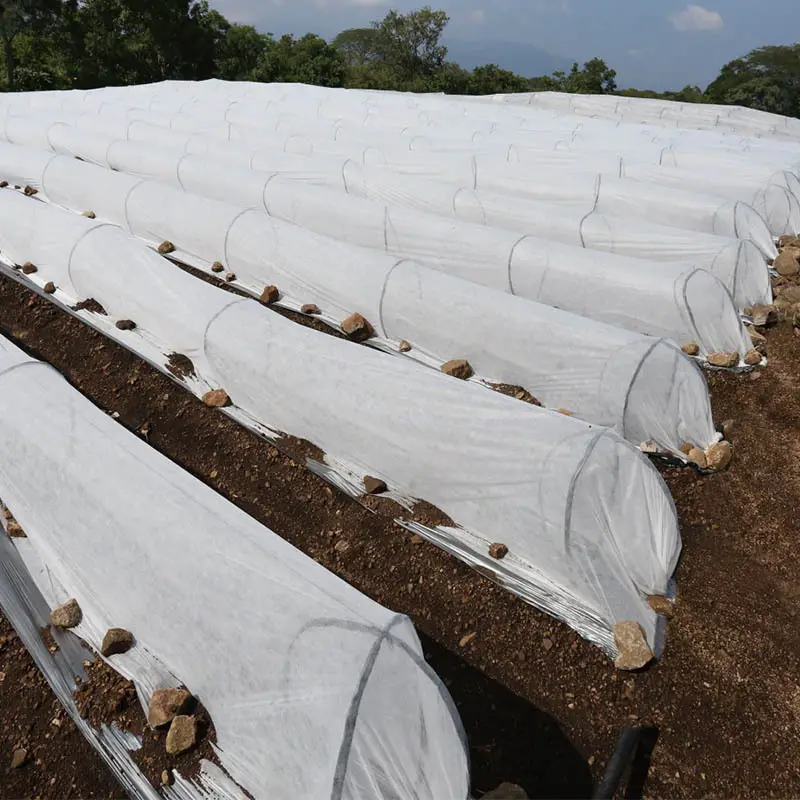
Factory price light weight 100% virign non woven floating row cover for vegetables
Non‑woven Floating Row Cover
Product Introduction
Non‑woven floating row cover is a lightweight agro‑textile made of polypropylene spun‑bond non‑woven fabric, usually with anti‑UV treatment for outdoor durability.
It is permeable to sunlight, air and rainwater, while creating a physical protective layer over crops.
Different grammage (17–50 gsm) matches different uses: lighter grades for insect‑proofing, heavier grades for frost & freeze protection.
It can be cut to any width & length, easy to spread, fix with stakes or stones, and reusable for several growing seasons with proper care.
Key features
✅ Lightweight, floats on top of plants without damage✅ Breathable, light‑permeable, water‑permeable
✅ UV‑resistant for long‑term field exposure
✅ Creates a warmer micro‑climate around crops
✅ Physical barrier, reduces pesticide use
✅ Customizable width, color, weight
Main Applications
1. Frost & cold protection
Traps ground heat, raises temperature under the fabric by 2‑4℃. Protects seedlings, vegetables, berry crops from late spring frost and early autumn cold snaps. Widely used for winter‑season crops.
2. Extend growing season
Covers can let farmers sow seeds earlier in spring and delay harvest in fall, gaining extra weeks of growing
Factory price light weight 100% virign non woven floating row cover for vegetables
The plant covers freeze protection not only could offer a strong protection from freeze, frost, snowstorm, heavy rain, strong sun lights and other harsh weather, but also could prevent your plants from attacking by birds, pests and insects. Fabric plant netting covers is ideal for extending the growing season into early spring and late and delay the harvest season.
Product Specification
| Material | 100% virgin polypropylene |
| Weight | 17gr to 34gr |
| Width | maxi 14m |
| Color | white, green or customized |
| Packing | Roll packed with 2inch or 3inch paper core |
| Lead time | 20days after deposit payment |
WHAT ARE FROST PROTECTION FABRIC MADE OF?
Frost protection fabric are typically made of polypropylene or polyester, as these materials do not absorb moisture, but allow rainfall and sunlight (the building blocks of healthy plant life) to pass through. Polypropylene and polyester row covers typically last multiple growing seasons. As row covers are generally made by gardeners by hand, the materials used to create them vary widely.
Though polypropylene and polyester are the best choices for protection and allowing rain and sunlight to pass through, gardeners oftentimes don’t have them on hand to use for row covers, which is why you will see makeshift DIY row covers made out of alternative fabrics.
However, polypropylene and polyester fabrics are highly recommended for the job, as many other types of fabric will become too heavy when soaked with water and end up smashing your plants into the ground without support. Even with support, these fabrics will not let in sufficient water or sunlight to perform the job correctly. Also, waterlogged fabrics can easily get mildewed, which can lead to insect infestations and diseases that you are using row covers to avoid in the first place.
More Choices
Get in touch with us
just leave your email or phone number in the contact form so we can send you a free quote for our wide range of designs